AI Automation and Chatbots: How Small Businesses Can Scale Without Adding More Staff
Why automation matters more than ever
When a business grows, the number of repetitive tasks also grows. A sales enquiry arrives by website form, a customer asks the same product question in WhatsApp, and a lead wants a quick answer outside business hours. Without automation, teams end up repeating the same conversations over and over.
AI automation changes that. Instead of treating every inquiry as a manual task, businesses can route requests, qualify leads, answer common questions, and schedule follow-ups automatically. The result is faster customer response, less operational overhead, and more time for high-value work.
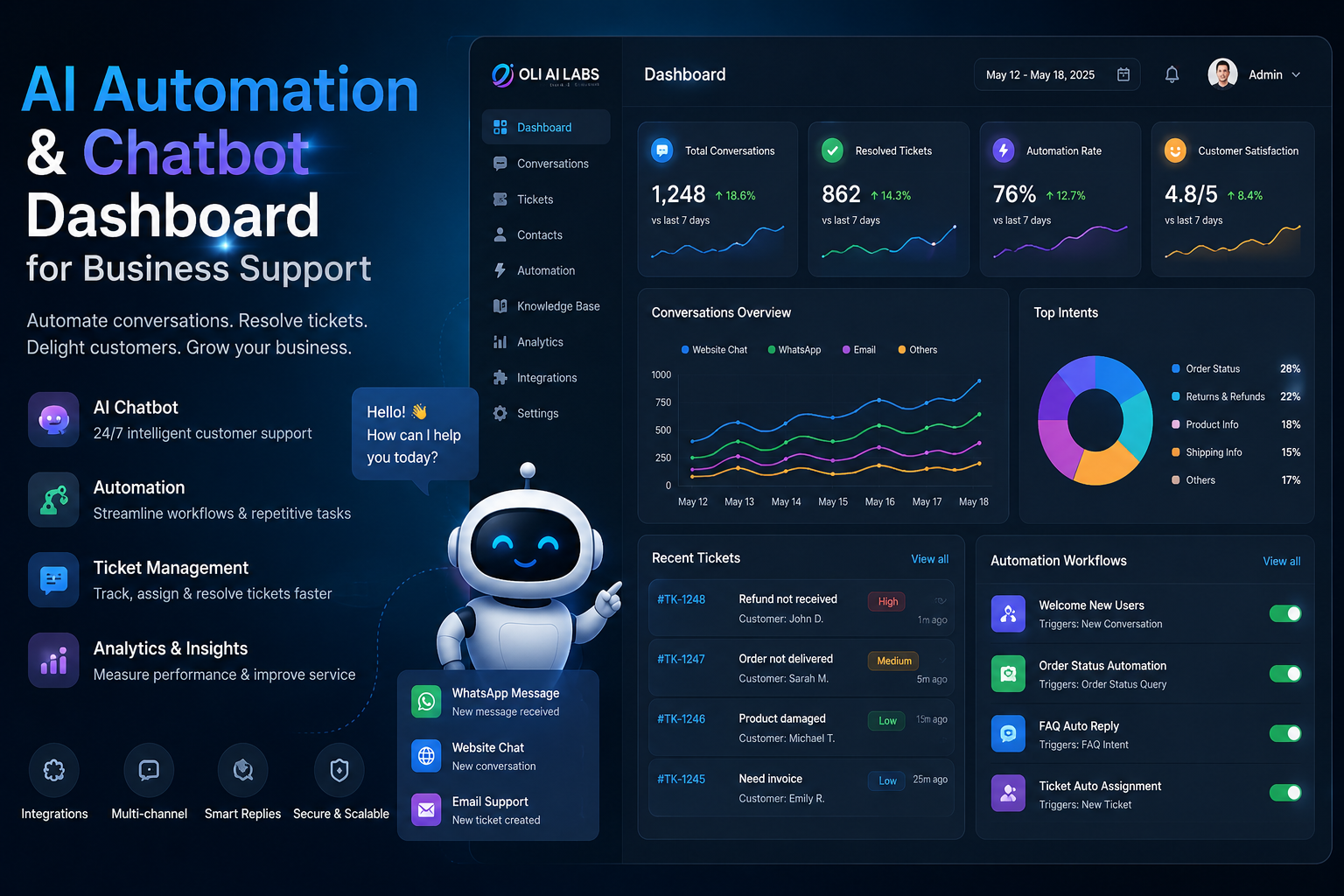
For many companies, AI chatbots are the first step. They handle repeat questions, capture details, and guide visitors toward the next action. When connected to CRM workflows or messaging tools, they become part of the sales engine rather than just a support feature.
What AI chatbots can actually do
A well-built chatbot does more than say hello. It can answer common questions about pricing, services, availability, or booking. It can qualify a lead by asking a few focused questions and passing the information to a sales team. It can connect users to WhatsApp, email, or a contact form without losing context.
This is especially useful for small businesses that need quick responses but do not have a full-time support team. A chatbot can work 24/7, which matters for international customers, after-hours enquiries, and busy sales pipelines.
The key is usefulness. Generic scripted bots often frustrate visitors. A business-specific chatbot trained on real FAQs, offers, and workflows feels more like a helpful assistant than a dead-end script.
Where automation creates the biggest impact
The best places to start are repetitive workflows: appointment booking, FAQ response, lead intake, CRM updates, WhatsApp follow-ups, and routine support requests. A simple automation can save hours each week and reduce missed opportunities.
For example, a website visitor lands on a service page and asks, ‘Do you build websites for real estate companies?’ The chatbot responds with a relevant answer and collects the company name, budget, and goal. That information can be sent to a sales pipeline automatically, without manual input.
This creates a smoother experience for the customer and a cleaner process for the business. Instead of spending valuable time on basic screening questions, the team can focus on conversion and relationship building.
A practical starting point
Businesses do not need a huge AI transformation to get value. They need a clear use case and a practical system. Start with a website FAQ chatbot or a WhatsApp lead bot. Measure the questions it answers, refine the flow, and expand from there.
The businesses that benefit most are usually the ones that have repeated enquiries, inconsistent handoff processes, or a growing pipeline that needs structure. AI automation makes those workflows easier to manage without increasing team size.
When designed well, AI automation does not replace the human experience — it supports it. It removes friction, shortens response time, and gives teams more room to focus on the conversations that actually matter.
Ready to turn your digital presence into a growth engine?
We build websites, automation, and conversational experiences that help businesses convert more leads.
Book a consultation